
Coastlines are among the most vulnerable frontiers in a country regularly battered by storms, and JCI Legazpi turned its attention there on April 1, 2026. Through a project called Roots for the Future: Saving Our Shores Through Mangrove Planting, the chapter led a coastal restoration effort at Barangay Lamba, Legazpi City, aimed at strengthening the community’s natural defenses.
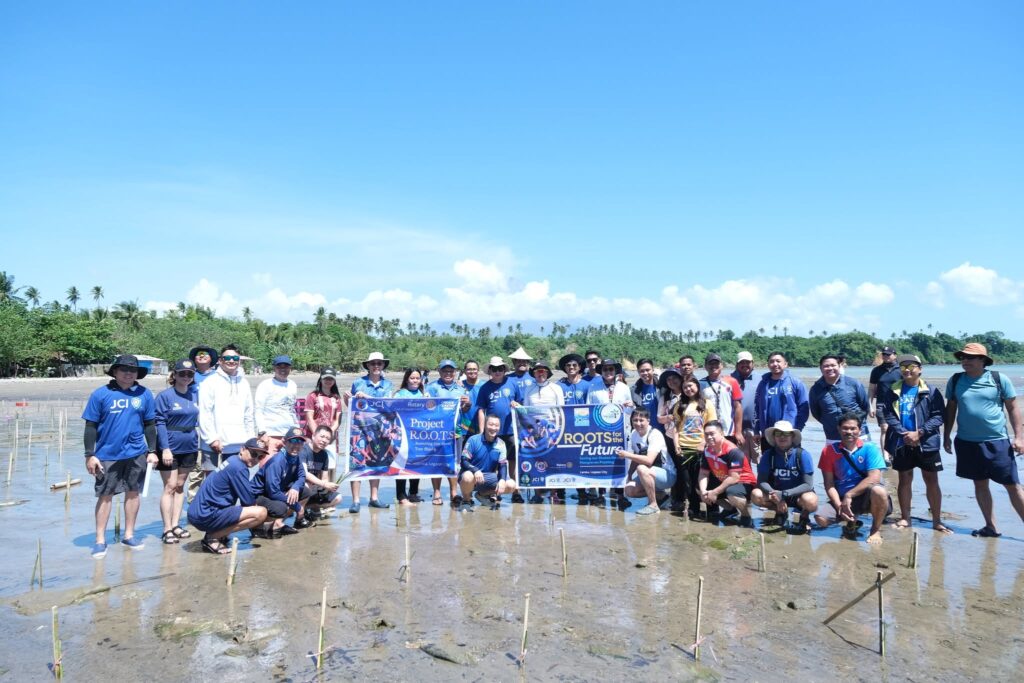
The initiative set out to do several things at once: strengthen coastal protection, promote biodiversity, and inspire collective action in preserving the community’s natural resources. Mangroves are uniquely suited to all three. Their dense root systems buffer shorelines against waves and storm surges, shelter fish and other marine life, and trap sediment that would otherwise erode the coast — making them one of nature’s most efficient forms of protection.
Roots for the Future was made possible through a partnership of organizations with a shared stake in the coastline. JCI Legazpi worked with the Barangay Council of Lamba, the Philippine Coast Guard Auxiliary of Albay, and the Rotary Club of Legazpi Central, uniting around a common commitment to environmental stewardship and community development. The barangay brought local knowledge, the Coast Guard Auxiliary brought maritime expertise, and the Rotary Club brought additional civic muscle.
Environmental projects can sometimes feel abstract, but mangrove planting is satisfyingly concrete. Volunteers can see exactly what they are building: a living green barrier that will grow stronger with each passing year. For a coastal community, that barrier is not symbolic — it is a practical line of defense for homes, livelihoods, and lives when the next typhoon arrives.
Just as important as the seedlings themselves was the example the project set. By inviting the community into the work, the organizers aimed to spark collective action — the understanding that protecting the environment is a shared responsibility, not a task to be left to others. A resident who plants a mangrove is far more likely to protect it, and to encourage neighbors to do the same.
The project also dovetails neatly with the global push for sustainability and the chapter’s own theme of sustaining the future. Few investments pay off as steadily over time as a healthy mangrove forest, which compounds its benefits year after year while asking little in return.
The name says it plainly: roots for the future. Long after the volunteers have gone home, the mangroves planted at Barangay Lamba will keep growing — anchoring the shoreline, sheltering marine life, and standing as a quiet reminder of what a community can accomplish when it decides to protect its own.