
In a province that lives alongside both floodwaters and an active volcano, preparedness is not a luxury; it is survival. On June 19, 2026, JCI Legazpi took on both fronts at once, advancing a project built around safety, innovation, livelihood, and emergency preparedness that reached two communities with very different needs.
The first prong addressed disaster readiness head-on. In partnership with Barangay Ilawod East, JCI Legazpi helped establish a Water Level Warning System designed to strengthen the community’s ability to respond when waters rise. The concept is simple but potentially life-saving: clear, visible markers and alert levels (Prepare, Alert, Evacuate) that give residents precious time to act before a flood becomes a tragedy. In emergencies, minutes matter, and a system that turns a rising river into an early warning can mean the difference between an orderly evacuation and a disaster.
What makes the initiative especially fitting is its emphasis on innovation at the grassroots. Rather than relying on costly or complex technology, the warning system equips an ordinary barangay with a practical tool it can read, understand, and act on for itself. It is preparedness owned by the community, not imposed from outside.
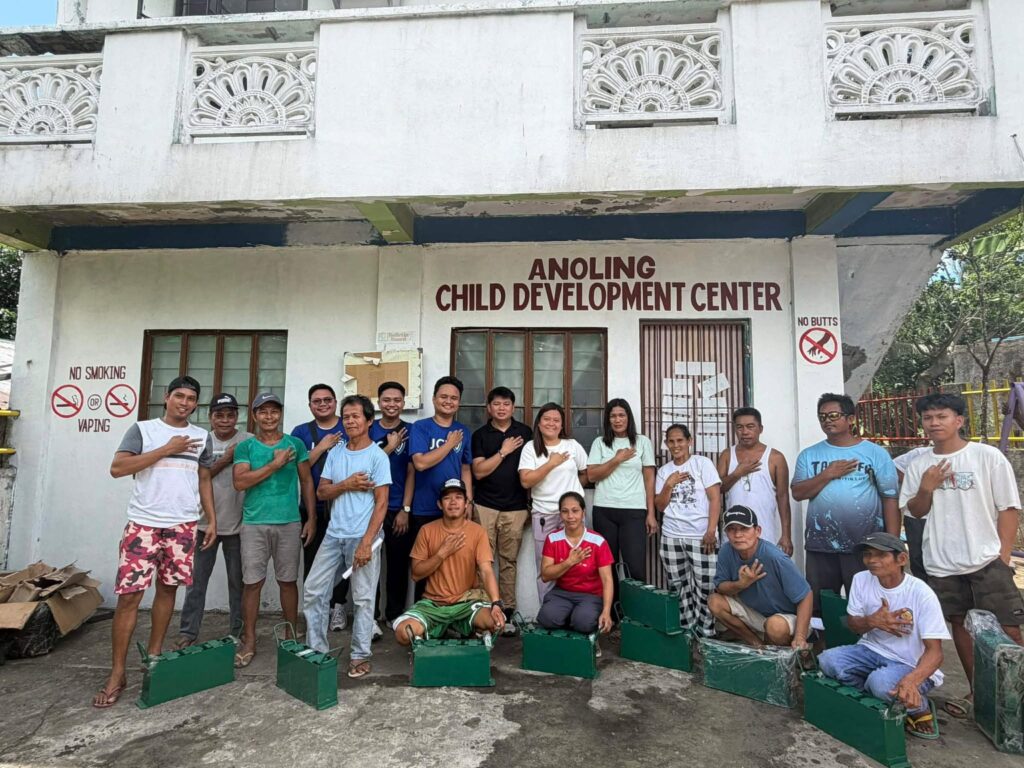
The second prong carried JCI Legazpi into Barangay Anoling, Camalig, Albay, where families have been heavily affected by the ongoing Mayon eruption. There, the chapter extended support through a livelihood project aimed at helping affected households rebuild and recover with dignity. The phrasing matters. For families displaced or disrupted by a natural disaster, dignity is often the first casualty; a livelihood restores not just income, but agency and self-respect.
Taken together, the two efforts reflect a mature understanding of what it means to stand with a community in crisis. Preparedness reduces the harm a disaster can do; livelihood support helps people recover once it has struck. One looks ahead to the next emergency; the other tends to the wounds of the last.
Carried under the banner of #MarketAndMarker, the project paired the markers of the warning system with the market opportunities of the livelihood effort, a tidy summary of a single, two-sided commitment. In a region defined by Mayon’s beauty and its dangers alike, JCI Legazpi reinforced a truth that runs through all its work: resilient communities are built before the crisis, and rebuilt with care after it.